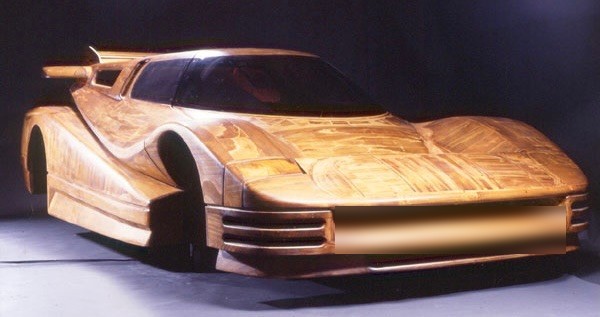
When Bugattis founder Ettore Bugatti returned to Molsheim after World War II, he found his factory in ruins and after his death in 1947, the company eventually closed its doors 1952. After many failed attempts to revive the brand through the 1950s-70s, the Bugatti name sat dormant with French government as a cultural asset.
When Bugatti ceased production in 1952, a 20-year-old Romano Artioli vowed to bring back Bugatti if no one else would. So in the following decades he amassed a fortune by becoming Italy’s biggest Ferrari dealer and the first importer of Suzuki’s into Italy. Then in the mid 80’s he took the initiative. He secretly negotiated with the French government for two years for the rights to use the Bugatti name and its intellectual property. At the time the rights weren’t directly held by the French government but rather by a French aerospace company called Snecma. So Artioli had to convince the French that an Italian entrepreneur who made his fortune off of Ferrari was the ideal candidate to bring back one of France’s most prestigious automotive names. Fast forward to 1987 when he founded Bugatti Automobili S.p.A., 39 years after promising to bring the name back onto the streets.
Artioli’s team requested styling proposals from Paolo Martin, Giorgetto Giugiaro, Nuccio Bertone, and Marcello Gandini, four of the greatest Italian designers alive at that time. The final EB110 design was based on Gandini’s submission, but modified by Gianpaolo Benedini.
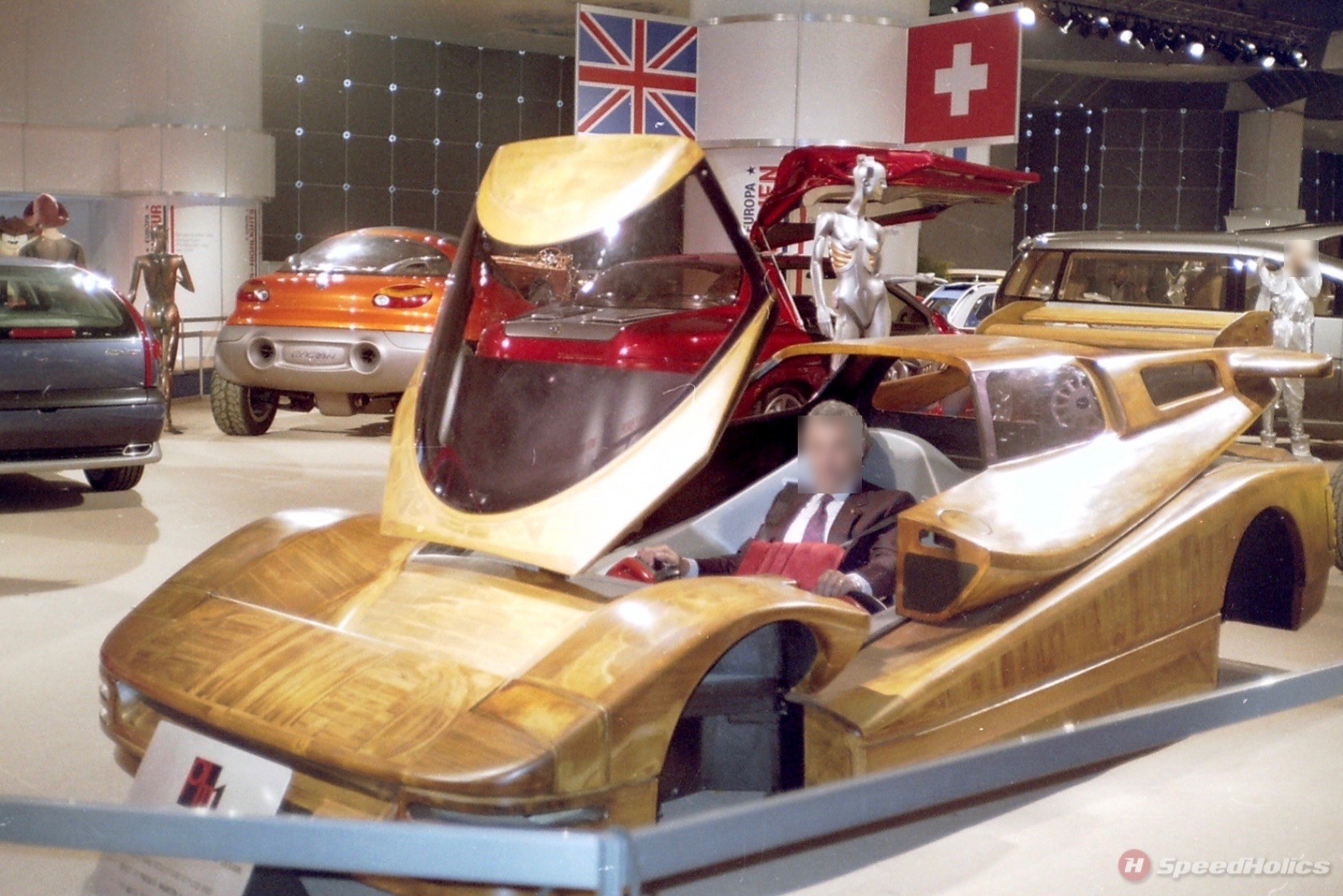
One of the submitted designs came from Paolo Martin, some of his most notable work came during his time at Pininfarina. This includes the Ferrari Modulo and the Fiat 130 coupé, two of his most celebrated designs. Both cars are credited as cornerstones of 70’s car design. The same design language later translated to Pininfarina’s Rolls-Royce Camargue.
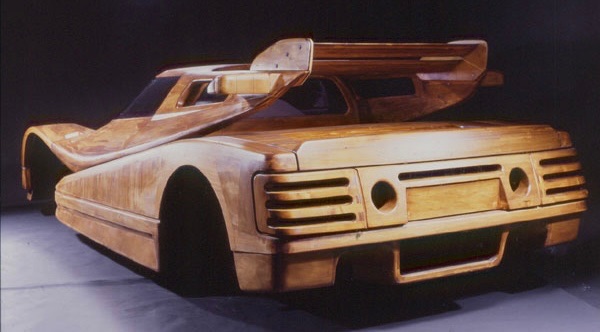
His design, dubbed the PM1 was a single seater concept with joystick and paddle controls instead of a steering wheel, a panoramic windshield and a floating rear wing. Martin built a 1:1 scale wooden model entirely by hand to show off his design. He eventually went public with the design in 1991 at the Turin Motor Show. So while Bugatti was off, building the more conventional EB110, Martin was carving his vision for Bugatti from wood.
Despite an enthusiastic response to the EB110, a combination of the Gulf War devastating American sales, a collapsing Italian economy, a rising yen, and Artioli having purchased Lotus and accumulated enormous debts led to Bugatti filing for bankruptcy on September 23, 1995, after producing around 128 cars. Volkswagen then acquired the brand in 1997 and the modern Bugatti era began, which eventually lead to the legendary Veyron.
To me, the PM1 is so interesting because it shows what Bugatti’s design language could have been and where it could have gone in the future.
While the design has its charm, I much prefer the design for the EB110.
If the PM1 would have made it into production, a lot of the wild design elements that made the car special, would have needed to be toned down or removed outright, like the flying wing for example. Without those features, the design would have looked too generic, to spearhead the revival of Bugatti. So this concludes the story behind Bugatti’s wooden concept, that never became a reality.